®
®
1. What Is a Solar Street Light
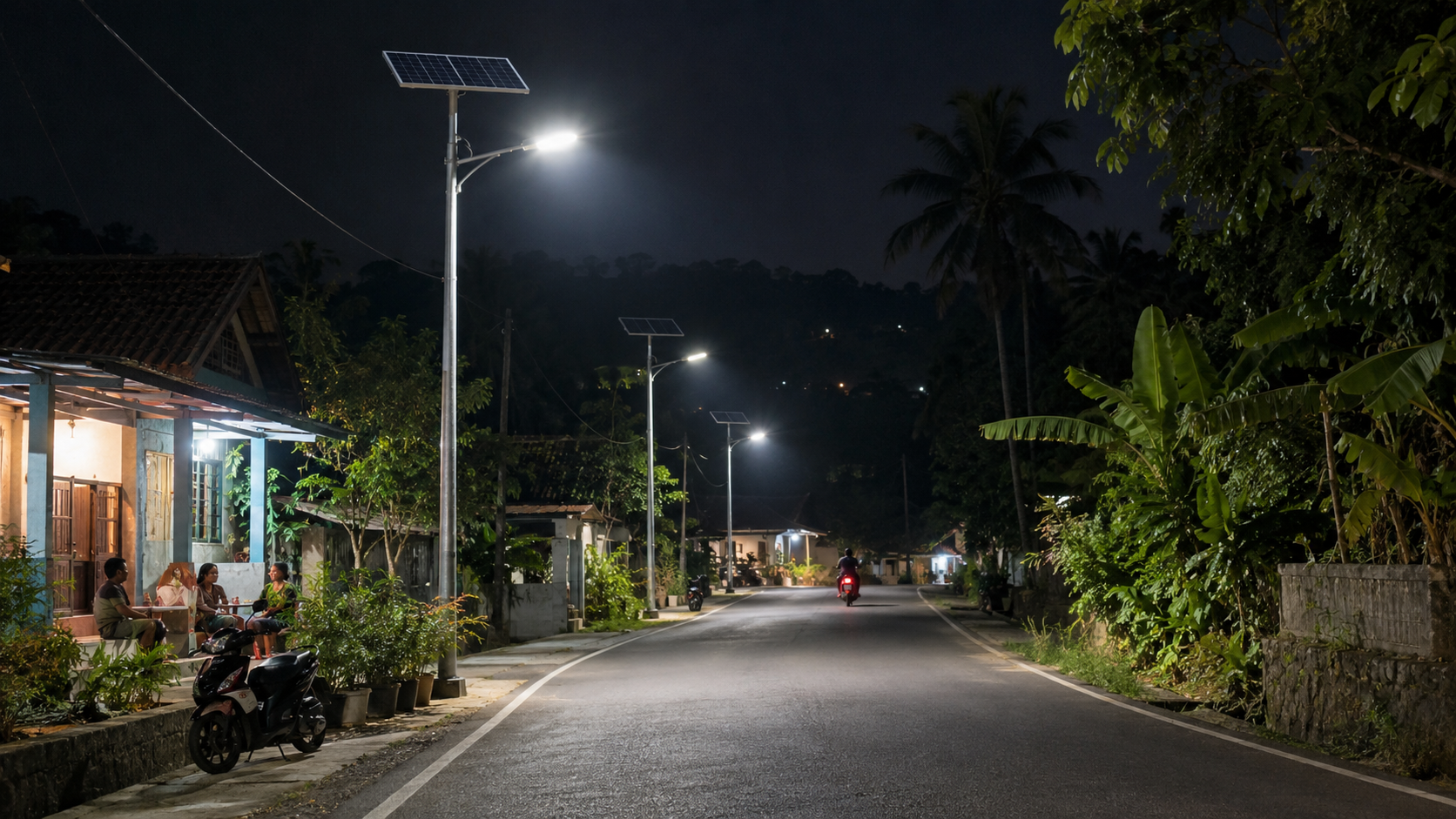
A solar street light is a lighting system powered entirely by solar energy. During the day, solar panels absorb sunlight and convert it into electricity, which is stored in a battery. At night, a controller automatically detects changes in ambient light and activates the LED lamp. Since the entire process operates without connection to the public power grid, it functions as a fully independent, off-grid power system.
2. Main System Components
A complete solar street light system typically consists of:
- Solar Panel (Photovoltaic Module): The core energy-harvesting component, usually made of monocrystalline or polycrystalline silicon, which converts sunlight into direct current (DC) electricity.
- Battery: Stores the electricity generated during the day. Common types include lithium batteries and lead-acid batteries, with lithium becoming the mainstream choice due to its compact size, long lifespan, and high efficiency.
- Smart Controller: The "brain" of the system, managing the charging and discharging process and automatically turning the light on or off based on ambient light levels. Higher-end models may also offer remote dimming and fault detection.
- LED Light Source: Modern solar street lights commonly use LEDs, known for low energy consumption, long lifespan, and high brightness.
- Pole and Mounting Bracket: Provides structural support for the solar panel and light fixture.
3. How It Works
The core principle behind solar street lights is the photovoltaic effect. When sunlight strikes the solar panel, it excites electrons within a semiconductor material (such as silicon), generating an electric current — converting light energy into electrical energy. This electricity is regulated by the controller: part of it is stored in the battery for nighttime use. When ambient light drops below a set threshold, the controller automatically activates the circuit, turning on the LED light; at dawn, it switches off automatically, beginning the next charging cycle.
4. Advantages
- Energy-Efficient and Eco-Friendly: Utilizes clean solar energy with zero carbon emissions, aligning with green, low-carbon development goals.
- Flexible Installation: Requires no cable-laying or trenching, making it ideal for remote areas or regions without access to the municipal power grid.
- Low Operating Costs: After the initial investment, there are virtually no ongoing electricity costs, offering significant long-term economic benefits.
- High Safety: Operates on low-voltage DC power, making it safer than conventional grid-powered street lights.
5. Limitations
- Weather and Seasonal Dependence: Extended periods of cloudy or rainy weather can reduce battery charge, affecting lighting performance.
- Higher Initial Investment: The cost of solar panels and batteries makes upfront costs higher than traditional street lights.
- Limited Battery Lifespan: The battery is typically the fastest-degrading component and usually requires periodic replacement.
6. Future Outlook
As photovoltaic technology advances and lithium battery costs decline, the cost-effectiveness of solar street lights continues to improve. Looking ahead, integration with Internet of Things (IoT) technology could enable remote monitoring, smart dimming, and fault alerts — expanding their role in smart cities, rural revitalization, and eco-tourism development.